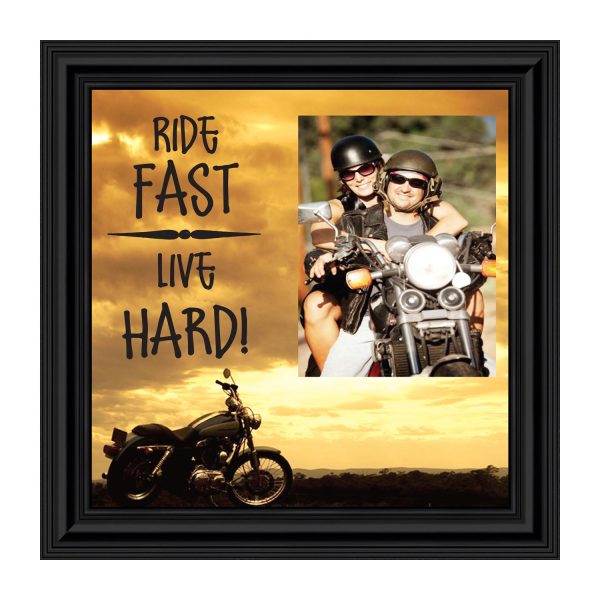
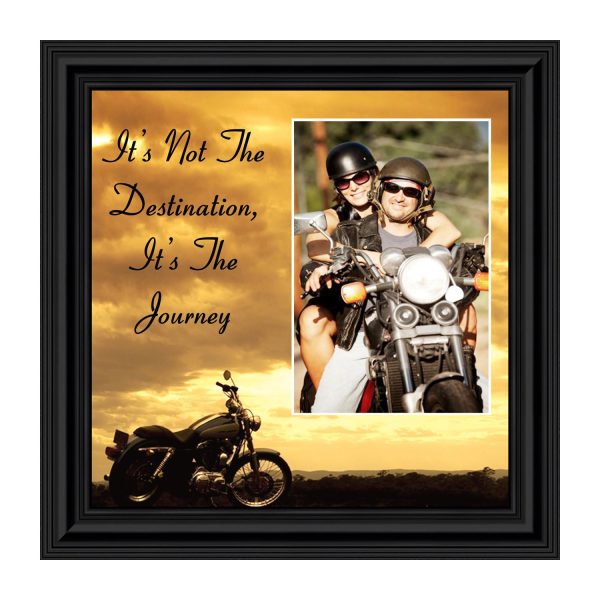
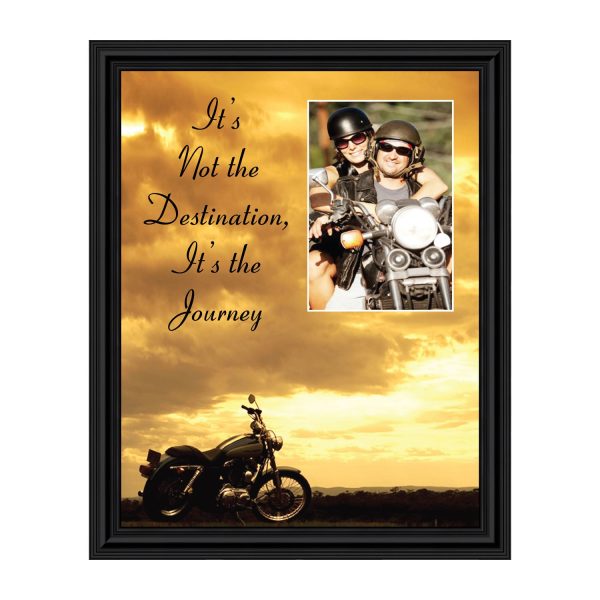
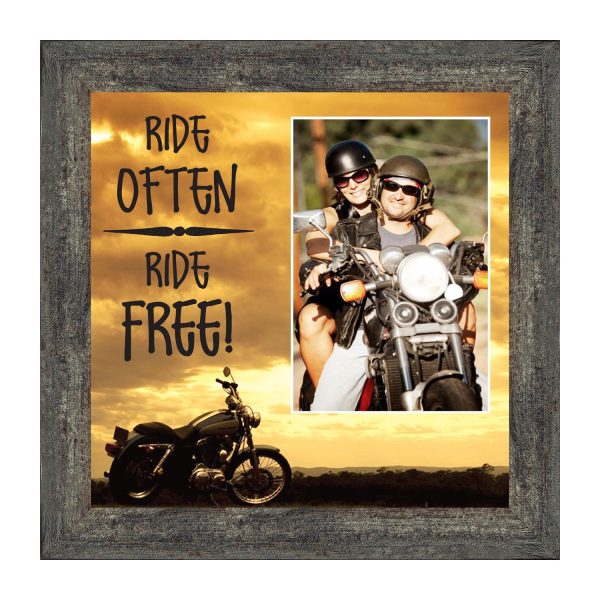
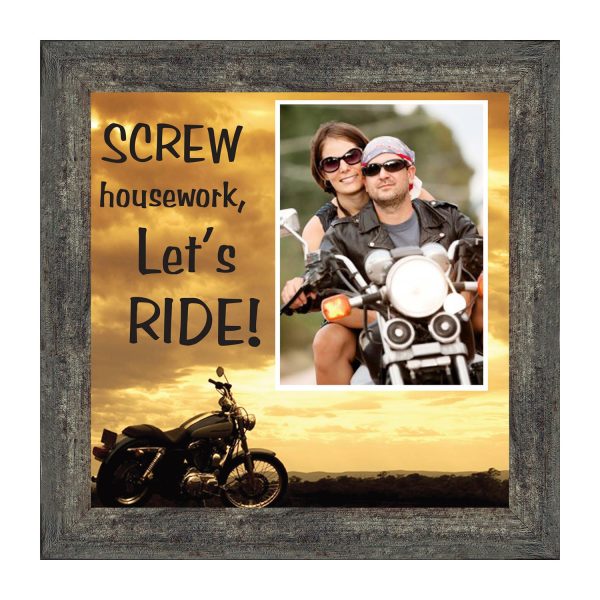
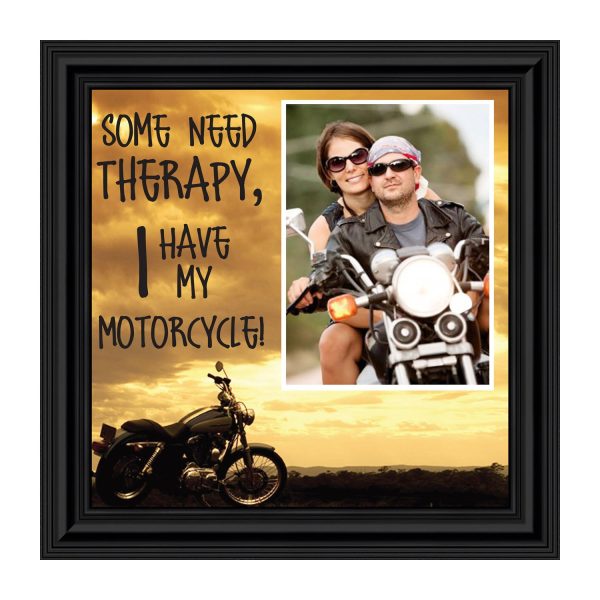
Motorcycle wall art tends to get bought for a particular rider rather than a particular wall, which is why what is on it matters more than whether it matches the sofa. Everything here was chosen with that in mind — the machine, the road, or the reason somebody rides.
What We Carry
Patent drawings of the machines themselves, taken from the original filings — engines, frames, carburettors, the pieces a rider can name on sight. Road poems and rider's prayers for the ones who think of it as something more than transport. Garage and workshop pieces for the half of the hobby that happens with the bike on a stand.
Who They Are Bought For
These work as biker gifts for men and for women who ride, as retirement gifts for someone finally with time for the road, and as a birthday or Christmas answer for the rider who buys their own gear and leaves nothing for anybody else to get them. A rider's prayer carries particular weight as a gift from a wife, a husband, or a parent — it says the thing that is hard to say out loud about somebody who rides.
Where They Go
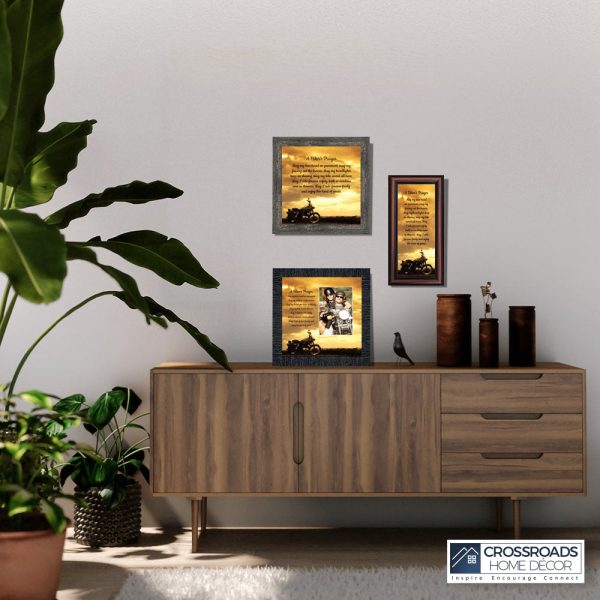
A garage or workshop wall, a den, a man cave, an office. The larger canvas sizes hold a wall on their own; the smaller framed sizes have a fold-out easel back as well as a hanger, so they work on a shelf, a workbench, or a desk.
Sizes, Frames And Canvas
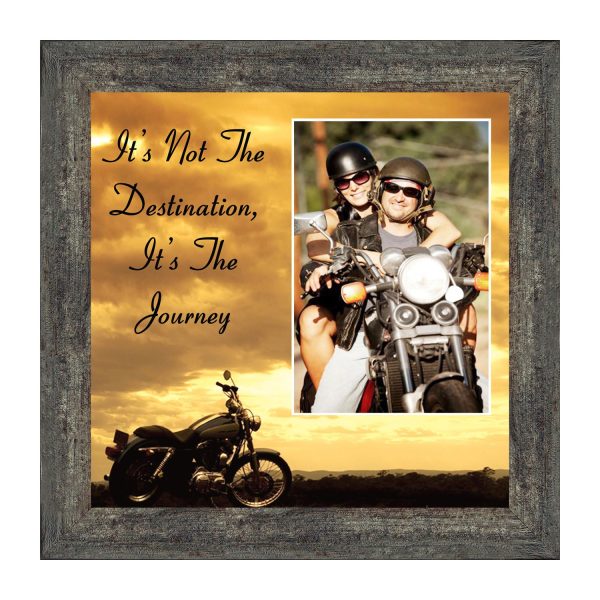
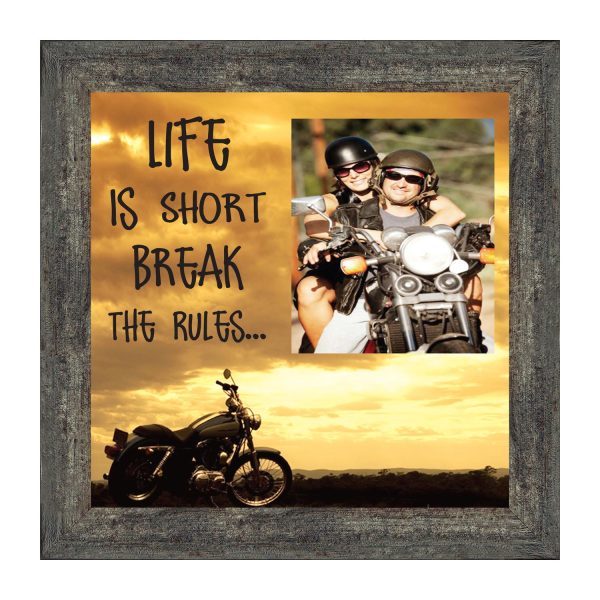
Framed prints come in Barnwood, Charcoal, Black, and Walnut, in several sizes. Canvas arrives ready to hang, gallery-wrapped or floating-framed. Everything is printed and finished to order in our family-owned shop in the USA with fade-resistant inks — no two orders sit in a warehouse waiting.
Choosing Between A Patent Drawing And A Poem
It comes down to whether the person is sentimental about the machine or about the riding. A patent drawing is the technical answer — it flatters somebody who knows how the thing works, and it hangs well in a garage or an office without announcing itself as a gift. A road poem or rider's prayer is the other answer, and it is usually the right one when the gift is coming from somebody who worries about them.
If you genuinely cannot tell, the patent drawing is the safer of the two. It asks less of the person receiving it.
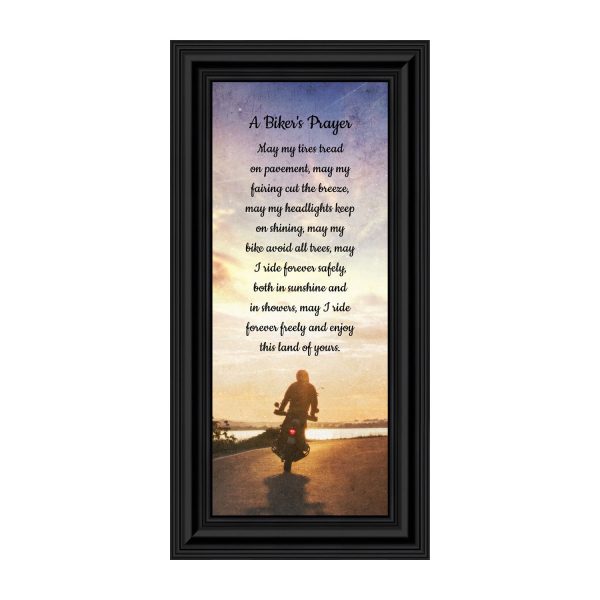

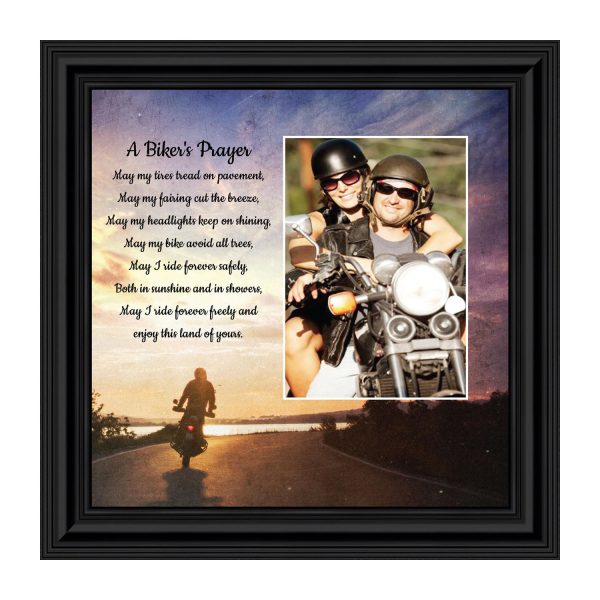
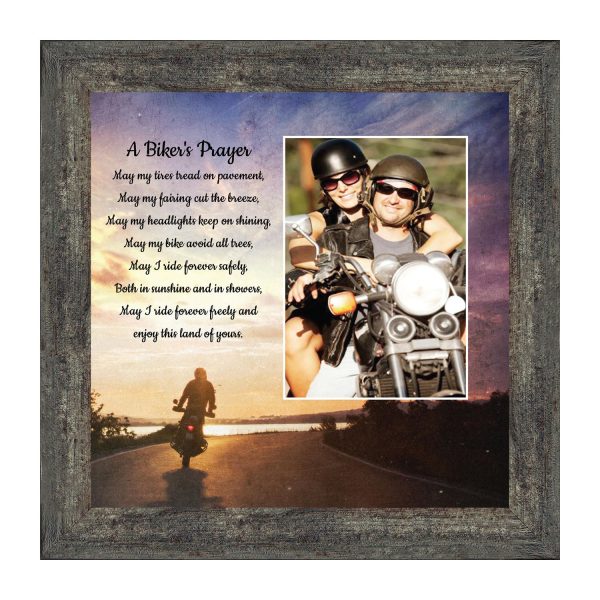
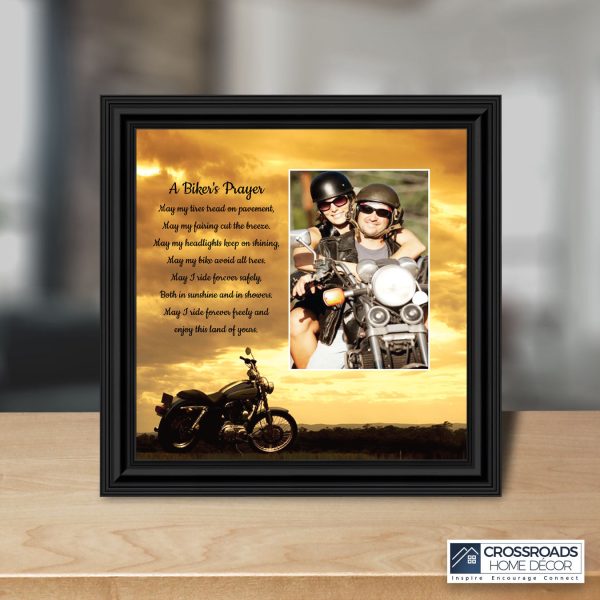
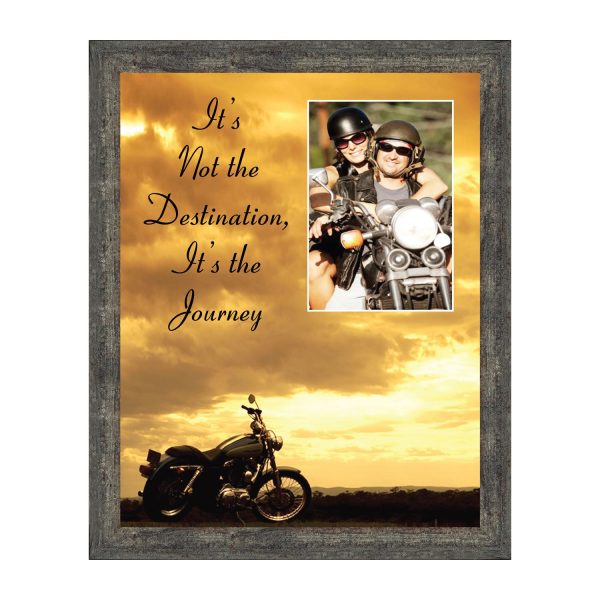
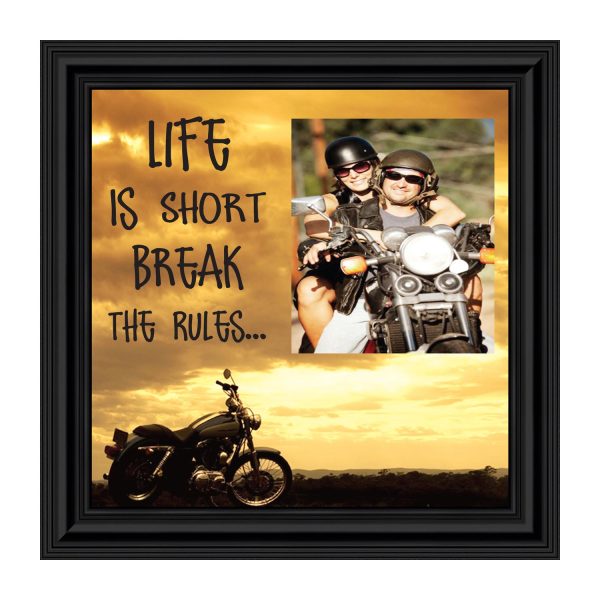
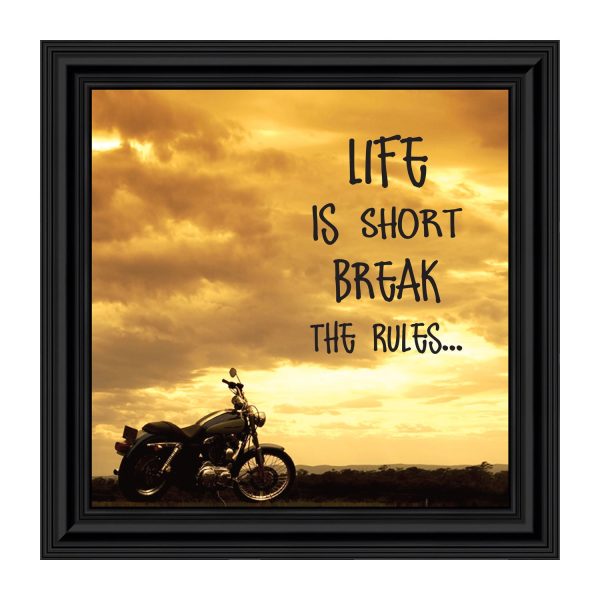
A Biker's Prayer, Gift for Motorcycle Riders, Inspirational Bike Picture Frame, 8x8, 6442
Price range: $23.99 through $28.99